
Last updated November 25, 2026
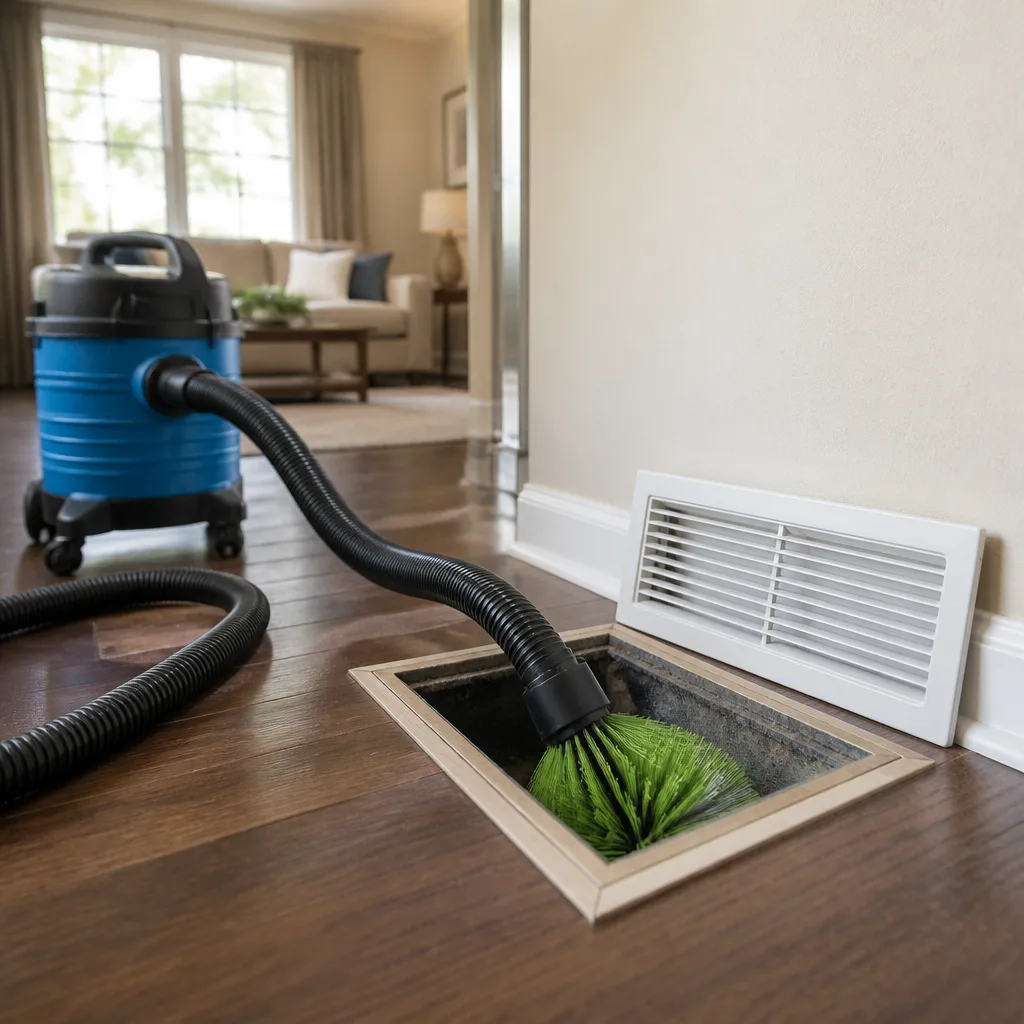 Whole-home duct cleaning
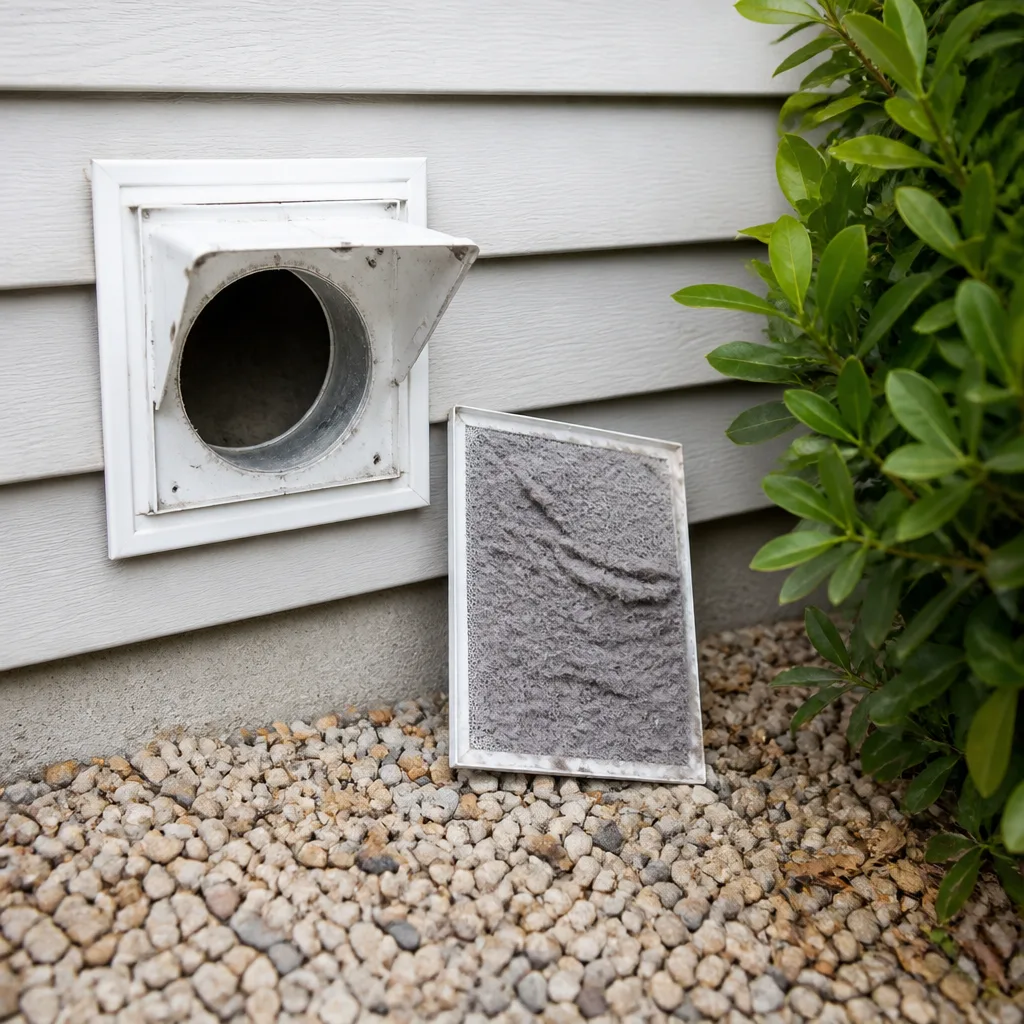 Dryer vent cleaning
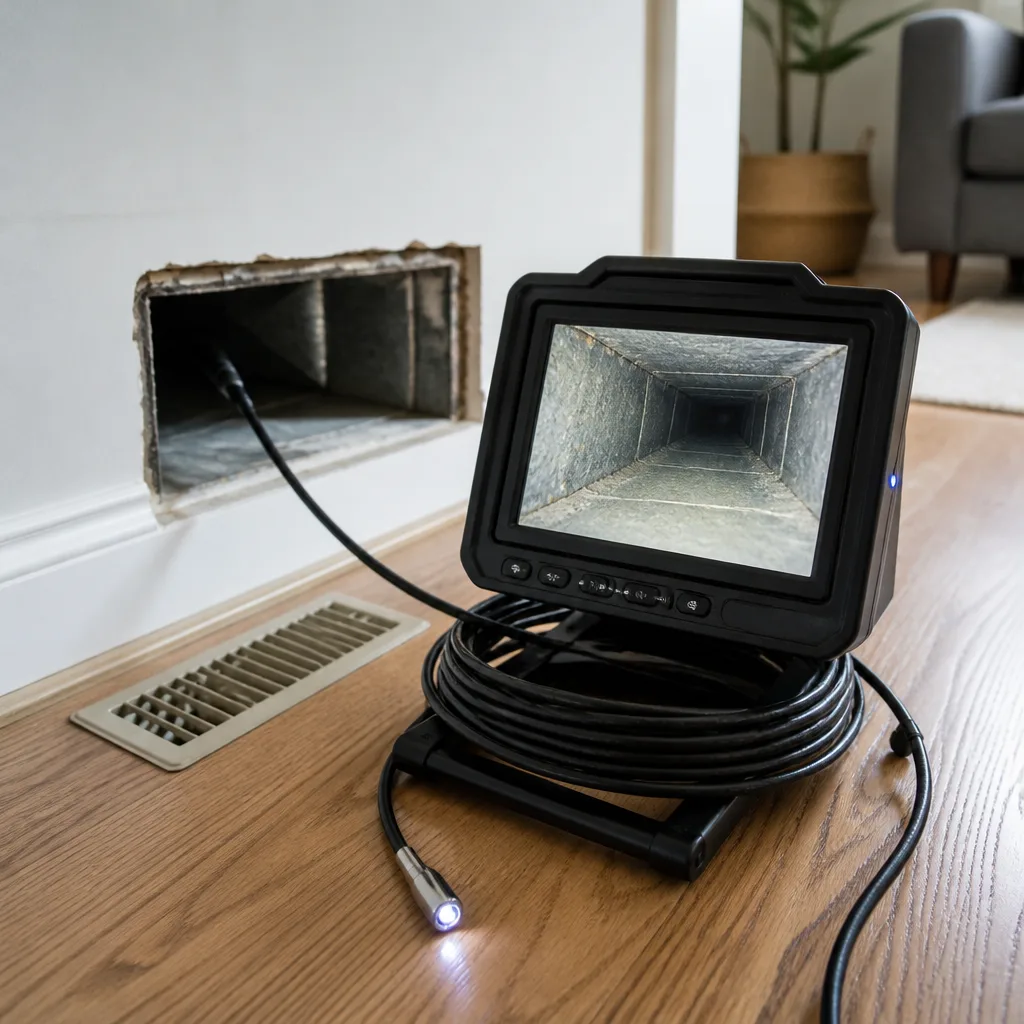 Camera inspection
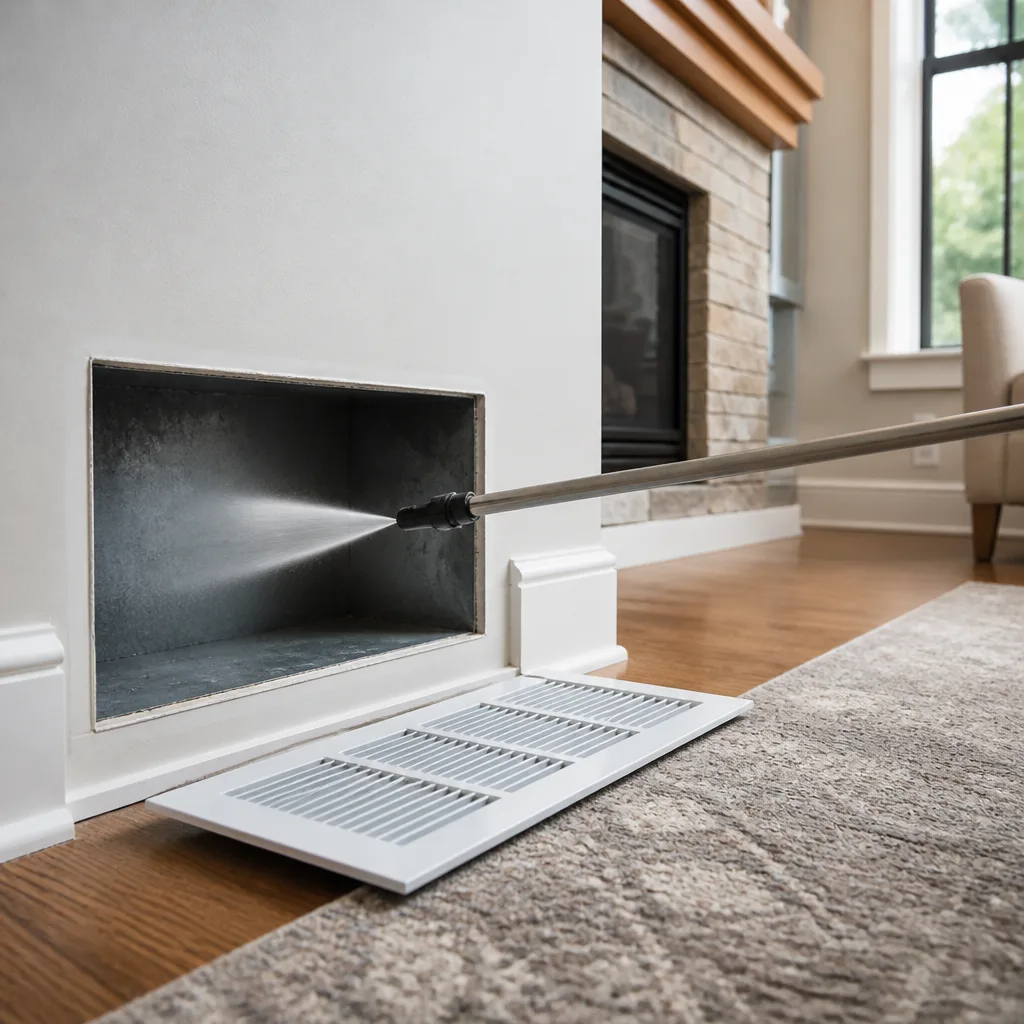 Sanitizing & deodorizing
Whole-system duct and dryer vent check with before-and-after photos - you see exactly what came out of your vents
That "$99 whole-house special" is a bait ad - the real number appears once they are in your hallway, or the "clean" is a shop-vac at the register. We photograph the inside of your ducts before and after instead.
DIY vs Professional Air Duct Cleaning: The Morningside Homeowner’s Decision Guide
Every hardware store sells a duct cleaning attachment that fits a shop vac. It looks like the answer to a $400 quote, and it costs about $30. Here’s the problem: none of those attachments can reach a trunk line, none of them create negative pressure, and none of them capture fine particulate before it drifts back into the room you’re standing in. That gap, not the price difference, is what the whole DIY versus professional debate actually hinges on. This guide walks through what consumer tools can genuinely accomplish in a Morningside home, what they can’t, and how to combine both approaches so you spend money where it changes the result and skip it where it doesn’t.
Quick Answer
Consumer tools can handle surface dust at the registers and short branch runs, but they can’t reach trunk lines, generate the negative pressure a contact vacuum creates, or capture fine particulate without releasing it into living space, which makes professional cleaning the right call for a full-system job, post-renovation debris, or any home with visible dust problems that keep returning. In Morningside, where a lot of housing stock dates to the mid-century boom and runs flex duct through tight chases, the risk of damaging ductwork during a DIY attempt is a real consideration, not a theoretical one.
Styles & brands we work with
- Whole-home duct cleaning
- Dryer vent cleaning
- Camera inspection
- Sanitizing & deodorizing
Table of Contents
- What Consumer Tools Can and Can’t Do
- Why Negative Pressure Is the Whole Argument
- Risk Factors Specific to Morningside Duct Systems
- Where DIY Interim Maintenance Actually Pays Off
- Building a Combined Approach That Saves Money
- What Professional Equipment Actually Does Differently
- How to Verify the Work Was Done
What Consumer Tools Can and Can’t Do
Start with an honest inventory. A homeowner with a shop vac, a brush kit, and a Saturday morning can accomplish a limited but real set of tasks. That list is shorter than the attachment packaging suggests, and knowing exactly where it ends is what keeps you from wasting a day and a hundred dollars on work that won’t move the needle.
What consumer tools can do:
- Vacuum loose dust and debris from the surface of supply and return registers
- Wipe down grilles and diffusers, which collect a visible film faster than the duct interior
- Reach a short, straight branch run within a few feet of a register on some systems
- Clear obvious obstructions near a register face, such as lint matting or a fallen piece of insulation
- Replace or clean a return filter, which matters more to indoor air than most duct cleaning does
What consumer tools can’t do:
- Reach trunk lines, plenum connections, or any run longer than the brush whip
- Create sustained negative pressure on the system while agitating debris loose
- Capture sub-micron particulate without exhausting it back into the room
- Inspect duct interiors for tears, disconnected joints, or crushed flex
- Sanitize a system or seal compromised ductwork once it’s found
That second list is where the actual contamination lives. Dust accumulates on trunk line surfaces and at every turn and transition, and the branches closest to the air handler carry the heaviest load. A brush stuck through a bedroom register never touches any of it. Understanding that boundary is the first real decision point for a Morningside homeowner weighing a DIY afternoon against air duct cleaning from a company with extraction equipment.
Why Negative Pressure Is the Whole Argument
Negative pressure is the technical heart of the debate, and it’s worth understanding because it explains everything else. When a professional system runs, it puts the duct network under vacuum and holds it there while a contact head agitates the interior surfaces. Debris comes loose and travels toward the collection unit instead of into the room. Without that vacuum, agitation does the opposite of what you want: it liberates dust and leaves it airborne.
Picture a shop vac running at a bedroom register. The vacuum pulls air toward its hose, but the rest of the duct network is still connected to the air handler and still open at every other register in the house. Air moves through the system to feed the vacuum, which means dust knocked loose two rooms away has a path toward living space rather than toward a filter. You’re not cleaning the system. You’re redistributing what’s in it, and the finest particles, the ones that stay suspended longest and travel deepest into lungs, are exactly the ones a shop vac filter is least likely to catch.
Professional extraction works differently. A Rotobrush contact vacuum pushes a rotating brush head through the duct while the vacuum holds the run under negative pressure, so the debris is captured at the point of agitation. Nikro HEPA extraction adds filtration fine enough to hold what the vacuum pulls, not just the coarse material. That combination is what remediation contractors use on mold and fire jobs, and it’s the same class of tool we run on residential duct work in Morningside. The physics is not marketing. A sealed system under vacuum is a different operation from an open system with a hose stuck in it.
Why “pushing dust around” is the right way to think about it
A DIY attempt on a dirty system usually makes the air worse for a day or two before it settles. That’s the tell. If you vacuum a register and the room smells dustier afterward, you’ve moved material into suspension rather than out of the house. Professional equipment is designed around a different goal: contain, capture, remove. Every component in the stack, from the vacuum to the HEPA filter to the containment at the register, serves that sequence.
Risk Factors Specific to Morningside Duct Systems
Morningside’s housing stock introduces failure modes a newer subdivision doesn’t have, and most of them turn a cheap DIY project into an expensive repair. The neighborhood has a large share of mid-century homes, plus a steady layer of 1990s and 2000s renovations layered on top, and ductwork sometimes reflects all of it: original galvanized trunk lines in the attic, flex branches swapped in during an addition, a chase that was rerouted when a kitchen opened up. It’s not a uniform system, and that matters.
Flex duct damage. Flex duct is a plastic liner over a wire helix, wrapped in insulation. A brush whip run through it at the wrong angle or with too much force tears the liner or separates it from the helix. Once the liner is compromised, the duct loses its vapor barrier, insulation sags, and the run has to be replaced rather than repaired. In a Morningside attic where flex runs are often compressed into tight spaces between rafters, the margin for error is smaller than it looks from below.
Dislodging debris into the air handler. Age and heat have made some of these systems brittle, and a branch run that’s been quietly holding a mat of dust and construction debris for years will release it the moment someone agitates it. If that material travels downstream, it lands in the evaporator coil or the blower. A dirty coil cuts efficiency, and cleaning one is a bigger job than the duct cleaning that caused it.
Hidden disconnections. Old duct systems develop gaps at joints, and a DIY brush can push a joint apart that was already loose. An unsealed or disconnected joint dumps conditioned air into an attic or crawlspace, and it’s invisible from the register. That’s one reason professional work includes HVAC cleaning alongside duct work: the technician can see the joints, the coil, and the plenum, and fix what’s found rather than leaving it.
Atlanta humidity and condensation. Morningside sits in a climate with long, humid summers, and duct systems in vented attics see condensation on cold surfaces during the cooling season. Moisture plus dust is the recipe for biological growth on duct interiors, and a shop vac can’t remove a biofilm. It can spread it. This is the scenario where sanitizing with a Guardsman-grade product after mechanical cleaning matters, and it’s a step no consumer attachment performs.
Where DIY Interim Maintenance Actually Pays Off
Here’s the part most professional companies skip, and it’s the most useful section in this guide. DIY maintenance between professional cleanings genuinely helps, and it costs almost nothing. The trick is doing the right tasks and leaving the rest alone. The dividing line is simple: anything you can reach without inserting a tool into ductwork is fair game.
- Change the filter on schedule. A clean filter is the single highest-return air quality action available to a homeowner, and it takes two minutes. Use the MERV rating your system was designed for; going higher than the equipment supports can restrict airflow and strain the blower.
- Vacuum registers and grilles monthly. The visible film on a supply grille is dust that would otherwise be pulled into the room. Wiping it down keeps it off the surfaces you touch.
- Keep returns unobstructed. Furniture pushed against a return grille strangles airflow, and restricted returns pull dust from every gap in the system. Clear at least a foot of space around each one.
- Watch the return for a gray film. A return grille that darkens within a few weeks of cleaning is telling you the system behind it is loaded. That’s a professional job, not a brush job.
- Clean the dryer vent on a schedule. This is the one piece of ductwork where DIY maintenance matters most for safety, and it’s covered in more detail below.
- Fix the source before cleaning. If a renovation is underway or a filter has been missing, seal off registers during the work. Cleaning a system that’s about to be filled with drywall dust again wastes the money.
Two of those items do most of the work: filter discipline and register hygiene. A homeowner who does both consistently can stretch the interval between professional cleanings further than the usual recommendations suggest, and that’s a real cost saving over time. What DIY interim maintenance does not do is reset the system. It manages the surface and the intake. It doesn’t touch what’s sitting on the trunk lines.
The dryer vent exception
Dryer vent cleaning is a different conversation, because the stakes are different. Lint accumulates in the vent run and is highly combustible, and a restricted vent also makes the dryer work harder and run longer. This is a dedicated service for us rather than an add-on, and it’s worth scheduling on its own if it’s been years. Many Morningside homes have vent runs that travel a longer path than the dryer manufacturer intended, through a wall or up through the roof, and those runs load up faster. A homeowner can pull lint from the immediate connection behind the dryer. The rest of the run needs equipment that reaches and extracts.
Building a Combined Approach That Saves Money
The DIY versus professional framing is a false choice. The better model is a two-track system: light maintenance you own, and periodic full-system restoration you hire out. Done right, the combined approach costs less than either extreme, because you’re not paying a professional to do register wiping and you’re not trying to do extraction work with consumer tools. Here’s how to structure it.
- Get a baseline. Have the system professionally cleaned and inspected once, so you know what you’re starting from. Any compromised ductwork found during that visit gets identified and handled up front rather than discovered later.
- Own the monthly tasks. Filters, grilles, return clearance, dryer lint trap. Fifteen minutes a month, no equipment beyond a vacuum and a rag.
- Watch for the signals that mean the baseline has shifted. Dust returning within weeks, a musty smell when the system starts, visible debris at registers, or a jump in energy bills. Those are the triggers for a professional visit, not the calendar.
- Schedule professional cleaning on a condition basis, not a fixed calendar. A home with pets, recent renovations, or a smoker in the household needs it more often than a low-occupancy home with a good filter habit.
- Handle dryer vent cleaning as its own scheduled item. It doesn’t track with duct cleaning intervals and shouldn’t be deferred to match them.
- Address duct sealing and repair when it’s found. A cleaned system with disconnected joints loses efficiency, and re-cleaning later still won’t fix the leak. Getting repair and sealing in the same scope as cleaning avoids a second call.
That structure also answers the pricing anxiety most homeowners bring to this decision. Whole-system cleaning is quoted per system, agreed before any work starts, and the written estimate sets the final number. Nothing gets priced per register or padded once the equipment is on site. We quote the system, do the work to the system, and stand behind it. That’s a different model from a coupon that turns into a larger invoice, and it’s the reason a combined approach stays predictable: you know the interval, you know the scope, and the cost doesn’t move once it’s agreed.
What Professional Equipment Actually Does Differently
A professional duct cleaning is a sequence of operations, not a single tool. Understanding the sequence tells you what you’re paying for and what questions to ask any company you consider. In our case the stack is Rotobrush contact vacuum systems for agitation under vacuum, Nikro HEPA extraction for capture, and Abatement Technologies air filtration for containment, the same category of equipment remediation contractors rely on. Consumer units aren’t a smaller version of these. They’re a different class of machine with a different job.
- Agitation under vacuum. The contact head scours the duct interior while the system holds negative pressure, so loosened material travels toward capture instead of into the room.
- HEPA-grade capture. Fine particulate is held by the filter rather than exhausted. This is the difference between removing dust and redistributing it.
- Reach into trunk lines and plenums. The sections with the heaviest accumulation are the ones a register brush never touches, and they need equipment with the length and power to get there.
- Inspection along the way. A technician running equipment through the system sees the joints, transitions, and flex runs. Compromised ductwork gets flagged and can be repaired and sealed in the same scope.
- Sanitizing after cleaning. Mechanical removal comes first; a Guardsman-grade sanitizing product applied afterward addresses odor and surface growth in a way no vacuum can.
- System-compatibility awareness. Duct work doesn’t exist in isolation from the filtration and humidity control already in the house. Technicians familiar with Honeywell and Aprilaire equipment understand how a cleaned, sealed system interacts with the components downstream, which matters when a homeowner is deciding whether to add or adjust filtration.
One call covering cleaning, sanitizing, and repair is the practical payoff. When a job reveals torn flex or an open joint, the same company fixes it rather than handing you a phone number. No second contractor, no re-inspection, no gap between the cleaning and the fix.
How to Verify the Work Was Done
Verification matters because the industry has earned some skepticism, and a homeowner who was burned by a coupon service is right to ask. The answer isn’t a certificate on the wall. It’s documentation and photographs. Ask before booking. A company confident in its process will answer all of these without flinching.
- Before-and-after photos of your own ducts. Not stock images, not a generic brochure. Your system, your runs, taken during the job.
- A written scope and a flat price per system. Agreed before work starts, with no per-register line items and no surprises once the equipment is running.
- What the equipment actually is. A company using professional extraction systems will name them. A company with a shop vac in the back of a car will change the subject.
- Whether repair and sealing are in scope. If they find a problem, can they fix it, or do they hand you off?
- What happens after the cleaning. Sanitizing, filter guidance, and an honest recommendation on when to schedule the next visit based on your system and household, not a fixed calendar.
One more check: timeliness. A real full-system cleaning takes time. It’s a methodical process with equipment staged at the system, and a job that wraps up in twenty minutes for a whole house is a job that didn’t happen. If you want a free estimate and a straight answer on scope, call (855) 907-3554. We answer 24/7, with fast dispatch from 7am to 7pm, Sunday through Friday.
Common Mistakes to Avoid
- Running a brush whip through flex duct without knowing what’s inside. Flex liners tear, and a torn liner means replacing the run rather than cleaning it. In a Morningside attic with tight chases and older flex runs, this is the most common expensive mistake.
- Cleaning registers and calling it duct cleaning. Surface work at the grille does nothing for the trunk lines, which is where the accumulation actually lives. It feels productive and changes nothing downstream.
- Paying for a cheap coupon service without asking what equipment shows up. A per-register teaser price usually means a shop vac and a brush, and the invoice grows once the technician is inside. Ask what extraction system the company runs before you book.
- Skipping the filter habit and expecting cleaning to compensate. A system cleaned without a filter discipline in place re-loads quickly. The cleaning buys time; the filter habit is what protects it.
- Ignoring the dryer vent because it’s not part of the HVAC system. Lint accumulation in the vent run is a fire concern and a dryer efficiency concern, and it’s easy to forget because it’s behind the machine. It deserves its own schedule.
- Treating a musty smell as a duct problem and cleaning repeatedly. Odor often traces to moisture, a compromised run, or condensation on cold surfaces in a humid Atlanta summer. Cleaning without sealing the source is a repeat bill.
- Not asking for photos. A company that can’t show you before-and-after images of your own system is asking for trust it hasn’t earned, and you have no way to confirm the work.
See the difference
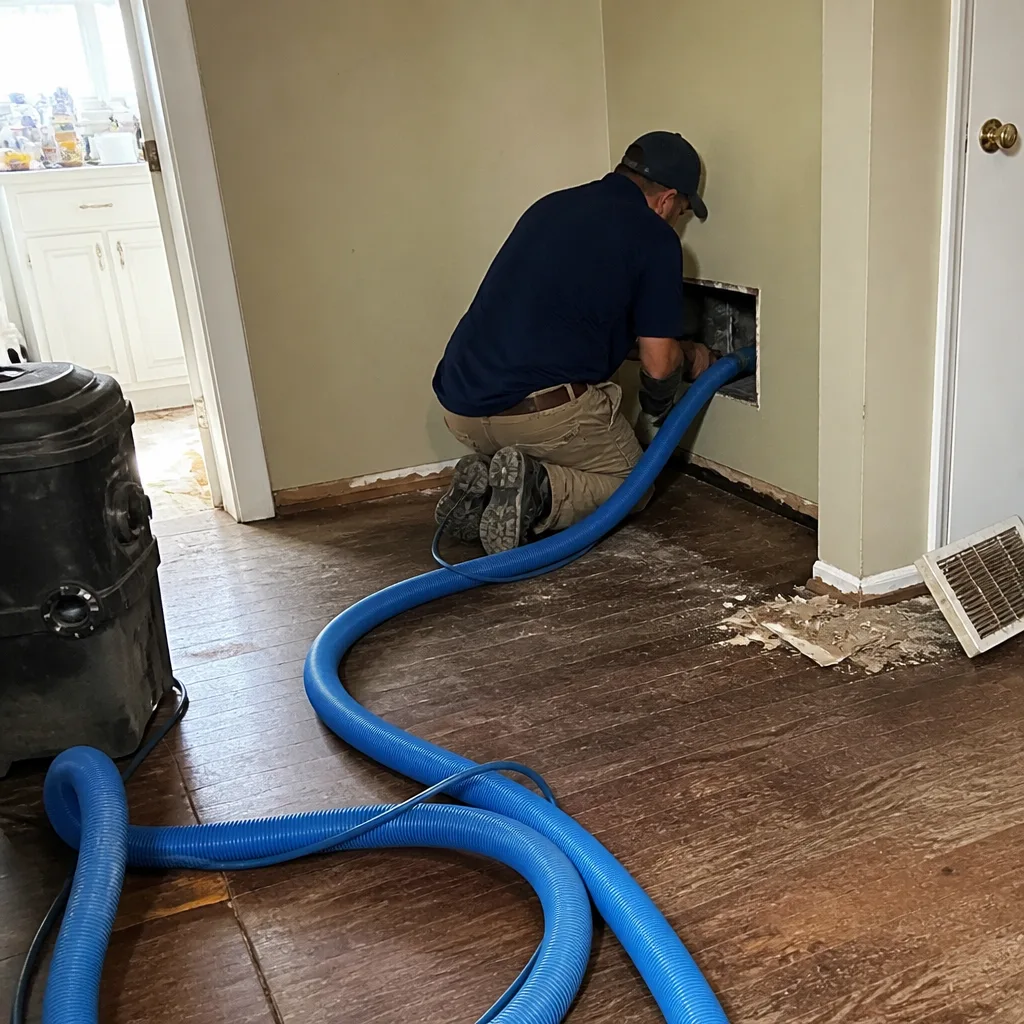 Before
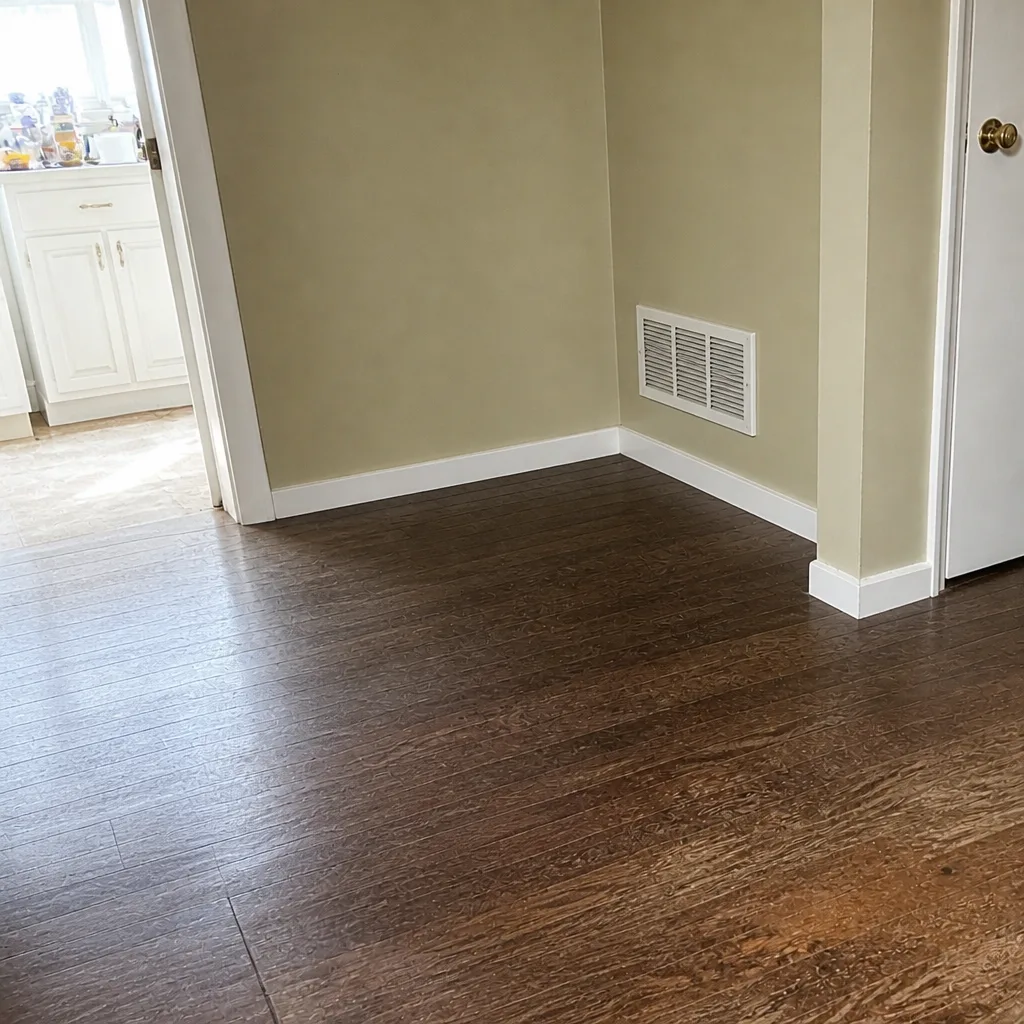 After
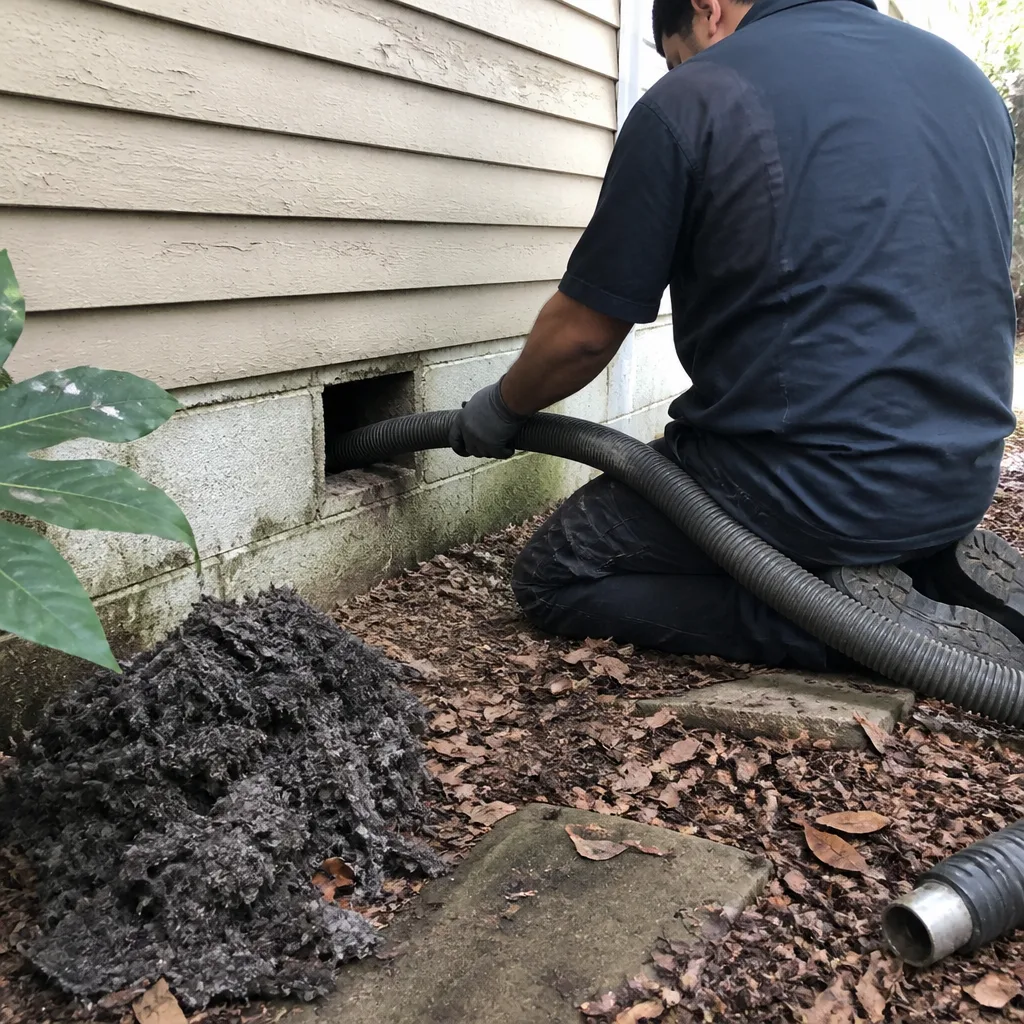 Before
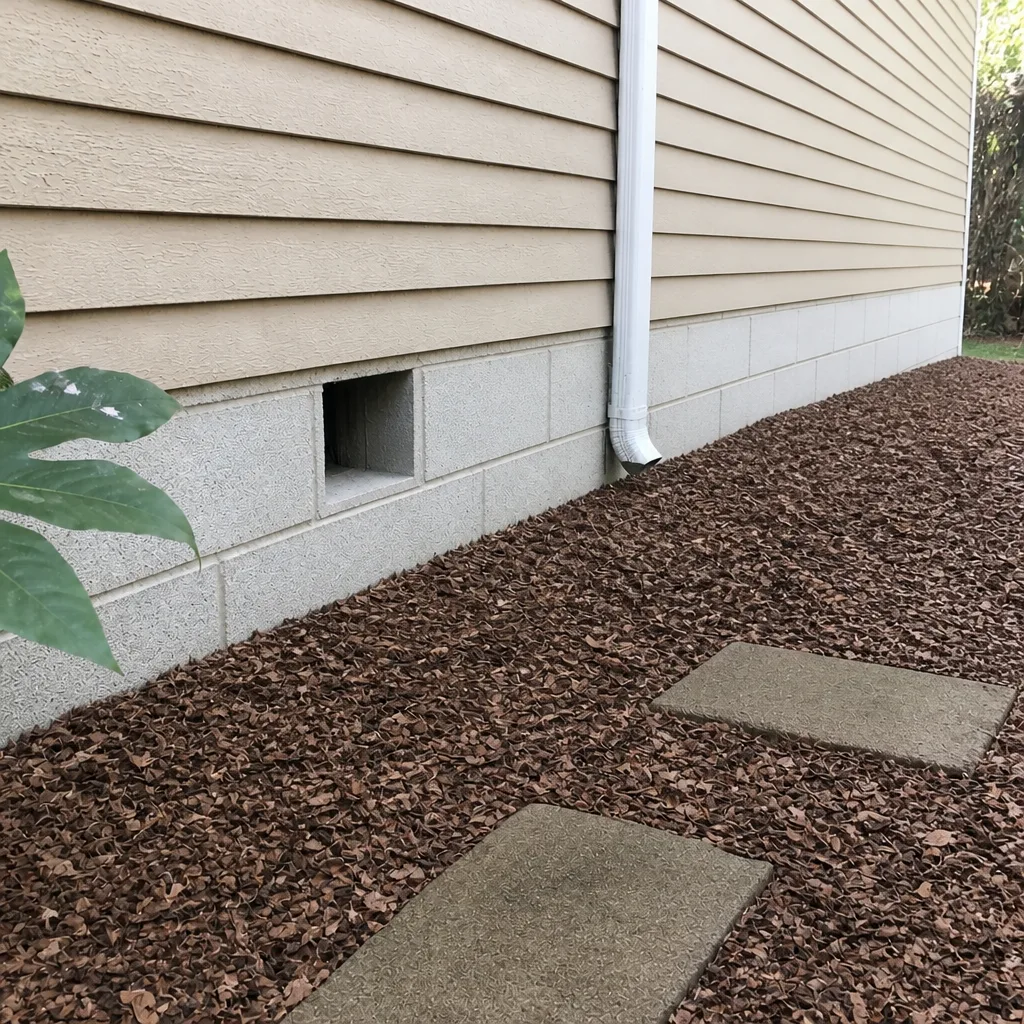 After
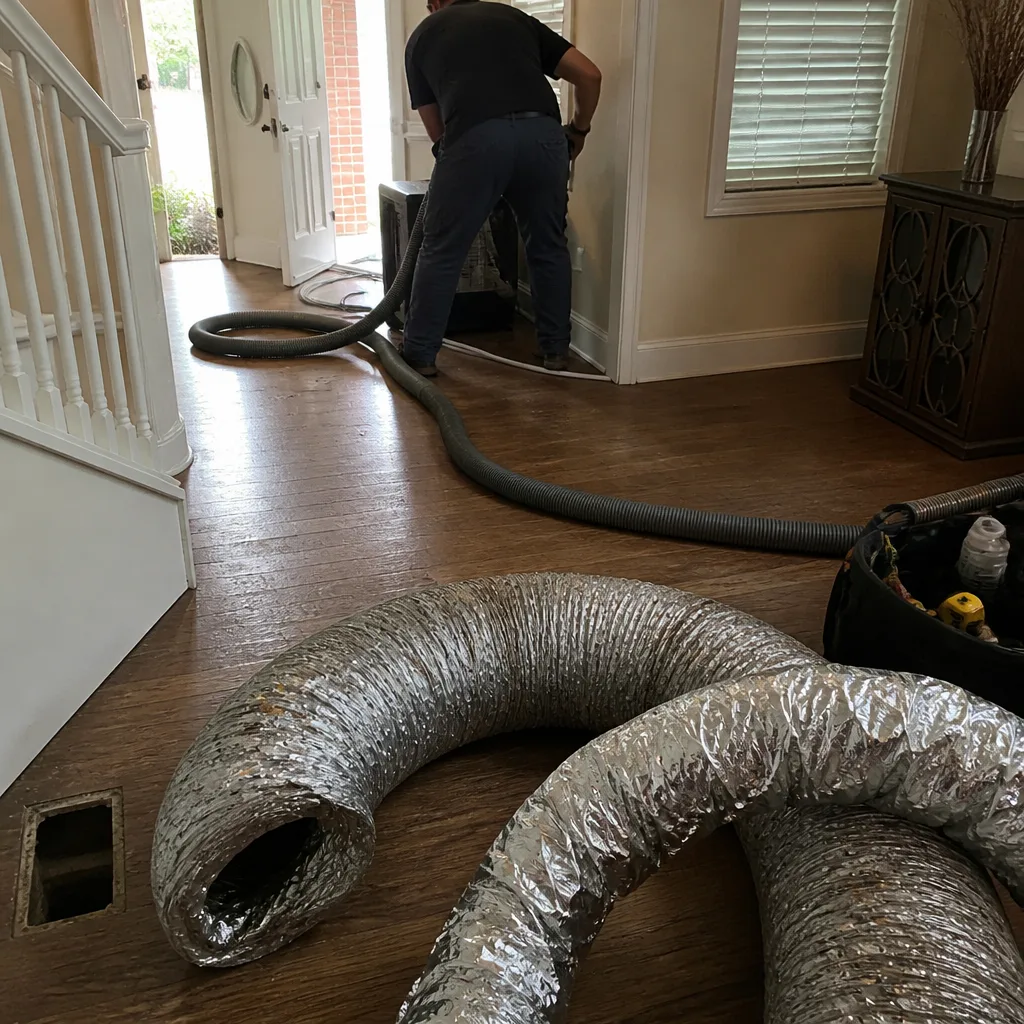 Before
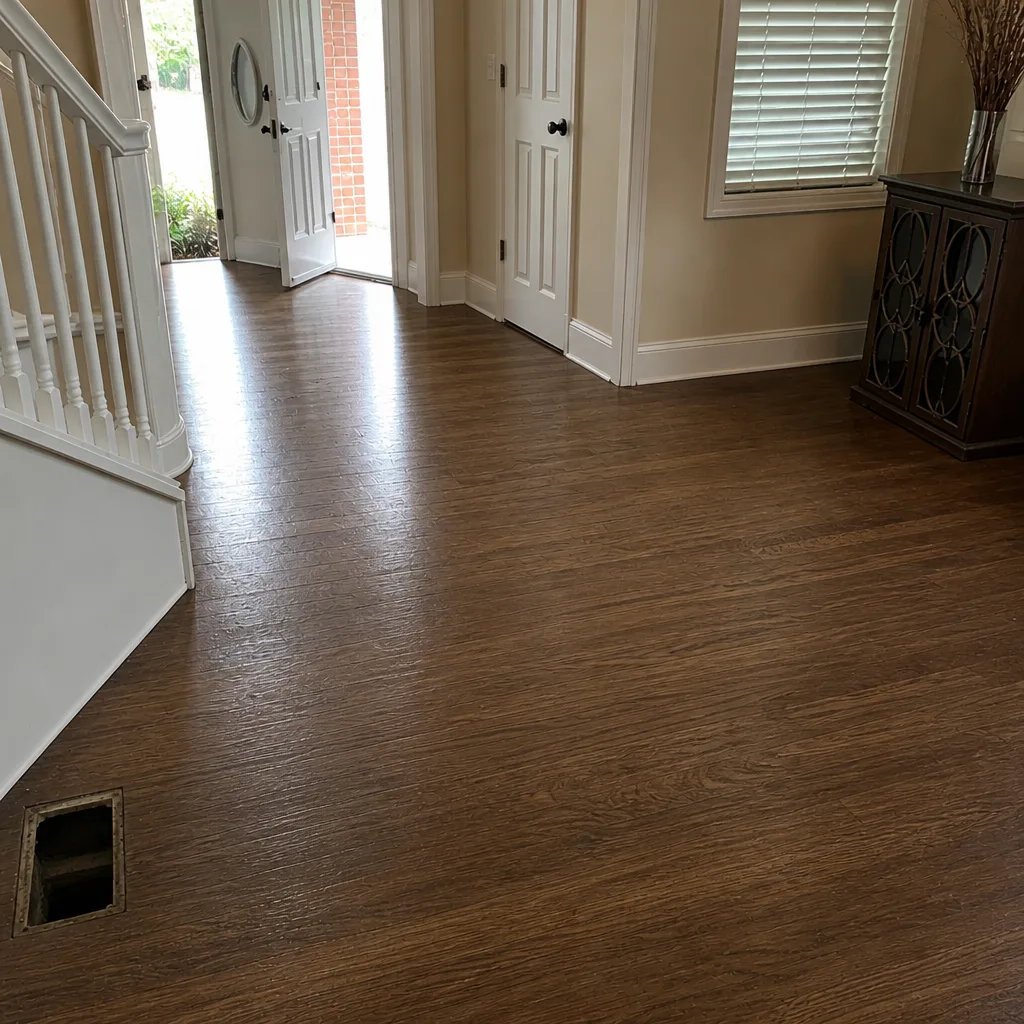 After
When to Call a Professional
Some situations call for a professional without much debate. Visible dust returning to surfaces within weeks of cleaning, a musty smell at system startup, debris visible inside a register, recent major renovation or drywall work, pest activity in the ductwork, or a home with a documented allergy concern in the household. Damage from water intrusion or a known mold issue is another clear call. And any system you’ve never had inspected, especially in older Morningside housing where the duct layout may have been modified during a renovation, is worth a professional look before you decide what it needs. DIY interim maintenance is a good habit; it isn’t a substitute for a full-system scope.
Air Duct Cleaning Morningside offers free estimates in Morningside and covers the whole scope under one call: dryer vent cleaning when the vent run needs attention, sanitizing after cleaning, and repair and sealing when compromised ductwork turns up. Call (855) 907-3554. We answer 24/7. Fast dispatch from 7am to 7pm, Sunday through Friday.
Frequently Asked Questions
Pricing is quoted per system by written estimate, agreed before work starts, with no per-register line items and no add-ons once the equipment is running. Whole-system jobs vary by the number of systems in the home, the condition of the ductwork, and whether repair, sealing, or sanitizing is part of the scope. Call (855) 907-3554 for a free estimate, and the written quote sets the final price.
Cheaper quotes usually mean smaller equipment, a shorter scope, or a price that grows once the technician is on site. A per-register teaser figure doesn’t reflect what full-system extraction with professional equipment involves, and the difference typically shows up in what isn’t cleaned: trunk lines, plenums, and the joints you can’t see from a register. Ask what equipment the company runs before booking. Call (855) 907-3554 for a scope-based estimate.
Ask for before-and-after photographs of your own ductwork, a written scope agreed in advance, and the name of the extraction equipment used on the job. Timeliness is a signal too, since a genuine full-system cleaning is a methodical process rather than a quick pass. Call (855) 907-3554 and ask what documentation comes with the job.
Condition matters more than the calendar. A household with pets, recent renovations, or a smoker needs it more often than a low-occupancy home with consistent filter habits. Watch for the signals instead: dust returning within weeks, musty odor at startup, visible debris at registers, or an unexplained jump in energy use. Call (855) 907-3554 for an honest recommendation based on your system.
Yes, and flex duct is the usual casualty. A brush whip run at the wrong angle can tear a flex liner or separate it from the wire helix, and once the liner is compromised the run needs replacing rather than cleaning. Older systems can also have joints loose enough that agitation pushes them apart. Call (855) 907-3554 if you’re unsure what your duct type can tolerate.
Yes, eventually. DIY maintenance manages the surfaces you can reach and keeps the system from loading faster, but it can’t put the trunk lines under negative pressure or reach past a few feet of a branch run. Think of it as extending the interval rather than replacing the job. Call (855) 907-3554 for a baseline inspection and estimate.
The Bottom Line
The DIY versus professional question isn’t a cost question, it’s an equipment question. Consumer attachments can manage surfaces and short branches, and those habits are genuinely worth keeping. They can’t create negative pressure, reach trunk lines, or capture fine particulate, and in Morningside’s older housing stock a DIY attempt can damage flex duct or dislodge debris downstream. The workable answer is the combined model: own the monthly maintenance, watch for the signals that mean the system needs a real visit, and schedule full-system cleaning on condition rather than a calendar. That approach spends money where it changes the result and keeps the rest in your hands.
Written by the team at Air Duct Cleaning Morningside.